Number 14, Suspiciously Normal: Why the Best Spy Thrillers Live Behind Net Curtains
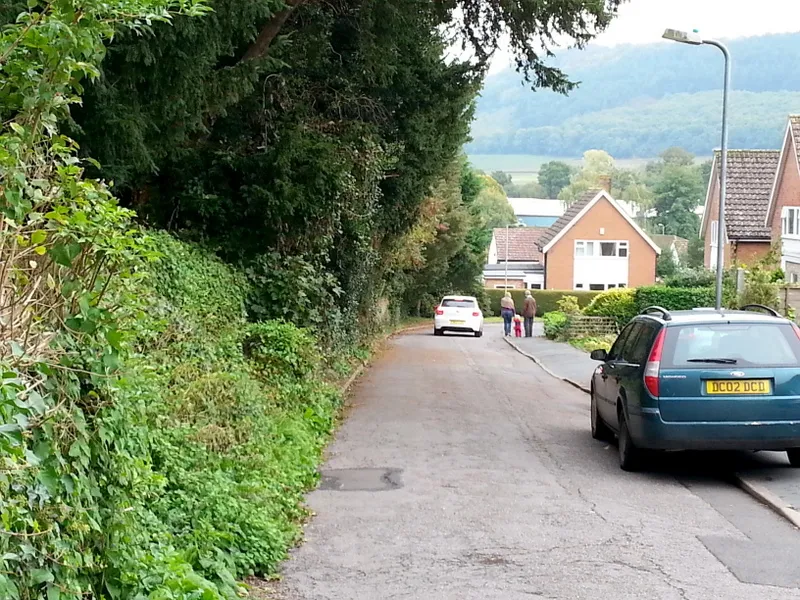
Photo: Jonathan Billinger , CC BY-SA 2.0, via Wikimedia Commons
Somewhere in the glossy spy thriller, there is a bunker. It has concrete walls, a wall of screens and a man in a headset saying ‘we have movement’. It is very impressive and almost entirely unconvincing. Give me a pebbledash semi with net curtains, two cars on the drive and one of them belonging to a man who is definitely not called Dave.
I am not against bunkers as a concept. They are excellent for storing wine and looking dramatic in a trailer. But as a setting for British spy fiction, they miss the point. The best spy stories are not about people who live in bunkers. They are about people who live in cul-de-sacs and have to pretend they are normal while the world quietly catches fire behind the bins.
Why normality is the best cover
Suburbia is a disguise made of routine. Everyone knows what time the neighbours put their bins out. Everyone knows which car belongs on which drive. That is precisely why a semi-detached safe house works. A man in a bunker is obviously a spy. A man in a conservatory with a wicker chair and a mug that says ‘World’s Best Grandad’ is invisible.
British spy fiction has always understood this better than it gets credit for. The threat does not arrive in a helicopter. It arrives in a Ford Mondeo at 2am. It does not announce itself with a laser. It knocks on the door and asks if you have a moment to talk about the parish council. The tension comes from the gap between the net curtains and the lies being told behind them.
The ranking: Britain’s classic semi-detached spy settings
-
The pebbledash semi with two cars and one lie. This is the gold standard. There is a hanging basket. There is a satellite dish. There is a man in the kitchen making tea while a encrypted laptop hums in the study. The neighbour thinks he is an accountant. He is, technically, an accountant of secrets.
-
The conservatory debrief. Nothing says British intelligence quite like discussing a defection while sitting on a wicker sofa beside a tray of Bourbons. The conservatory is a liminal space: too hot in July, too cold in January, and always slightly too full of plant pots. It is perfect for a conversation that should not be happening.
-
The garden shed dead drop. A shed should be slightly chaotic. If it is suspiciously tidy, with a padlock and a piece of chalk on the shelf, someone is using it for more than storing the strimmer. The best spy sheds have a lawnmower, a radio and a false bottom to a seed tray.
-
The cul-de-sac safe house. A borrowed life in a borrowed house. The safe house should have neutral curtains, a generic kettle and a neighbours’ WhatsApp group that notices everything. The spy inside is not hiding from the world; they are hiding in plain sight at number 14, where the recycling is collected on Tuesdays.
-
The neighbourhood watch WhatsApp group. This is amateur signals intelligence with a photo of a cat as the group icon. ‘Has anyone seen a white van?’ ‘Number 14 had a different car last night.’ ‘Is that man with the clipboard supposed to be there?’ They are not spies, but they are observant, and that is half the battle.
What the neighbourhood watch really thinks of late-night car swapping
They think it is suspicious. They are right. But they also think it is slightly rude. A late-night car swap disrupts the unspoken choreography of the street. The neighbour at number 12 has a system: bins out at 8pm, car in the garage by 9pm, curtain twitch at 9.15pm. A stranger reversing a grey hatchback at 2am is not just a security concern; it is a breach of local order.
The beauty of the cul-de-sac thriller is that everyone is watching everyone, but no one wants to be the first to say anything. The result is a polite stand-off of suspicion. The spy is trying to look normal. The neighbours are trying to look uninterested. The dog at number 9 is barking at a fox. It is not glamorous, but it is British.
The semi-detached safe house is a state of mind
In the end, the appeal is not really architectural. It is psychological. The semi-detached safe house represents the gap between the ordinary life we present and the complicated life we lead. It is a place where a person can make a cup of tea, check a lock and quietly wonder who is parked across the road.
So let the blockbusters have their bunkers. I will take the conservatory, the shed and the suspiciously tidy cul-de-sac every time. The stakes feel higher when the danger has to squeeze past a wheelie bin.