Twenty-Four Sleeps to Slightly Less Treason: The Call MI5 Advent Calendar 2026
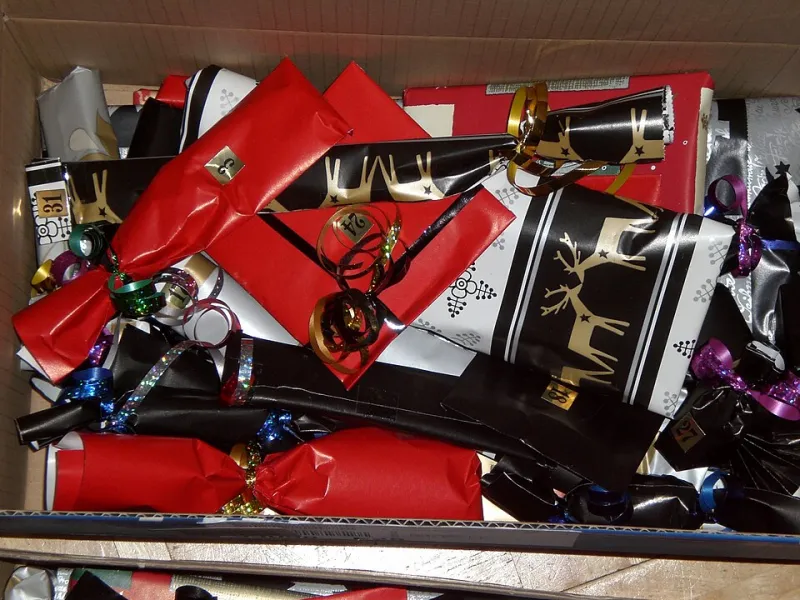
Photo: F_A, CC BY 2.0, via Wikimedia Commons
Advent calendars are meant to build anticipation. Ours builds a mild, defensible suspicion. Behind each door below is a small, true-ish dose of British espionage trivia: enough to make you interesting at a Boxing Day drinks party, not enough to get you escorted from Thames House.
Print this page, stick it on the fridge, or read one entry aloud each morning until someone asks you to stop. That is how you know it is working.
How to use your suspiciously educational calendar
Each day is a bite-sized fact. No spoilers, no quizzes, no need to don a trench coat. If you want to make it competitive, award one point for a correct follow-up question and two points for a fact that makes someone say, 'Sorry, what?'
Week one: origins, offices and official secrets
Day 1 — The Secret Service Bureau. MI5 began life in 1909 as part of the Secret Service Bureau, a small outfit trying to make sense of German espionage worries. It was less gleaming HQ, more filing cabinet with ambition.
Day 2 — Thames House. MI5's best-known London home is Thames House, a grand building on Millbank. It looks like a government office because, reassuringly, it is one.
Day 3 — Regnum Defende. MI5's motto translates as 'Defend the Realm'. A useful phrase to deploy when someone asks why you are reading the back of a cereal packet with such intensity.
Day 4 — Official Secrets Act 1911. This famously broad piece of legislation has shaped spy fiction for over a century. It is also why every thriller has at least one scene involving a document and a very serious face.
Day 5 — Room 40. During the First World War, the Admiralty's Room 40 codebreakers worked on intercepted signals. The name sounds like a meeting room; the work was rather more interesting than a weekly catch-up.
Day 6 — Bletchley Park. Britain's Second World War codebreaking site is now a heritage attraction, which means you can buy a pencil sharpener on the site where history was changed. That is very British.
Day 7 — The Double Cross System. Rather than simply catching enemy agents, British intelligence turned some of them into double agents. The technical term is 'turned'; the practical term is 'extremely awkward Christmas party'.
Week two: wartime tricks and Cold War habits
Day 8 — Operation Mincemeat. A wartime deception involving a body, false papers and a lot of nerve. It has been filmed more than once, which is the ultimate British compliment: we will not stop telling the same story if it has good coats.
Day 9 — The Cambridge Five. A group of Soviet spies recruited from within the British establishment. Their story remains a handy reminder that charm is not a security clearance.
Day 10 — The Portland Spy Ring. A Cold War case involving naval secrets and a seemingly ordinary suburban setting. The lesson: never underestimate a quiet street and a suspiciously well-informed neighbour.
Day 11 — Dead drops. A dead drop is a secret place to leave material for someone else to collect. In London, the best ones are probably not the bench beside the busiest Tube entrance, no matter what the films suggest.
Day 12 — Hollow coins. Concealed containers have long been a spy-fiction staple, and hollow coins really have featured in espionage history. It is also why some of us check our change with unnecessary drama.
Day 13 — Microdots. Shrinking documents into tiny images was a real Cold War technique. In 2026, we call this 'sending a PDF', but the drama is admittedly lower.
Day 14 — Buttonhole cameras. Covert cameras have been hidden in clothing and everyday objects. The modern equivalent is probably a doorbell, which is why we are all slightly more surveilled than we think.
Week three: directors, legislation and unlikely bestsellers
Day 15 — Stella Rimington. In 1992, Stella Rimington became the first female Director General of MI5. She later wrote spy novels, proving that the transition from intelligence to publishing is not as far-fetched as it sounds.
Day 16 — The Security Service Act 1989. This put MI5 on a statutory footing. It is the bureaucratic equivalent of being given a proper name badge: less glamorous, more accountable.
Day 17 — Spycatcher. Peter Wright's 1987 memoir caused a legal rumpus and became a bestseller in places where it was not meant to be available. A useful reminder that banning a book is often the best marketing campaign.
Day 18 — The Wilson Plot. In the 1970s, rumours about Soviet penetration of British institutions swirled around. It is a reminder that spy stories often say more about paranoia than proof.
Day 19 — Numbers stations. Shortwave radio stations reading out numbers have fascinated spy watchers for decades. Nobody has ever made a numbers station sound relaxing, which is part of their appeal.
Day 20 — Declassified files. Many historical intelligence files are now available at The National Archives in Kew. You can research real spy history and then buy a sandwich, which is a very civilised afternoon.
Week four: Christmas, cover stories and 2026 drama
Day 21 — The festive dead drop. A Christmas market is theoretically excellent cover: crowds, gloves, bags, and everyone pretending not to notice the price of mulled wine. Theoretically, we stress.
Day 22 — The mince pie alibi. If you are asked why you are loitering near a postbox, say you are waiting for a Christmas card. It is seasonal, plausible and involves paper. Very spy-adjacent.
Day 23 — The 2026 drama effect. Spy dramas in 2026 continue to borrow from real cases: dead drops, double lives and the awful moment when someone realises the paperwork does not add up. Fiction keeps borrowing because reality keeps obliging.
Day 24 — The Christmas Eve debrief. Pour something warm, review the month's trivia and ask the only question that matters: did anyone in your family seem unusually interested in the recycling bin? If so, congratulations. You have completed the Call MI5 advent calendar.
The printable bit
For a proper fridge-ready version, print this page in portrait, cut along the week headings, and fold each day into a little door. Or simply leave it on the kitchen table and let curiosity do the work. Either way, you have 24 tiny doses of British spy trivia and a festive excuse to say 'well, actually' at least once a day.
Merry Christmas, and remember: a little suspicion is healthy. A spreadsheet of your neighbours' bin collection times is probably too much.