The Trowel and the Treason: Why Britain’s Garden Centres Make Perfect Spy Sets
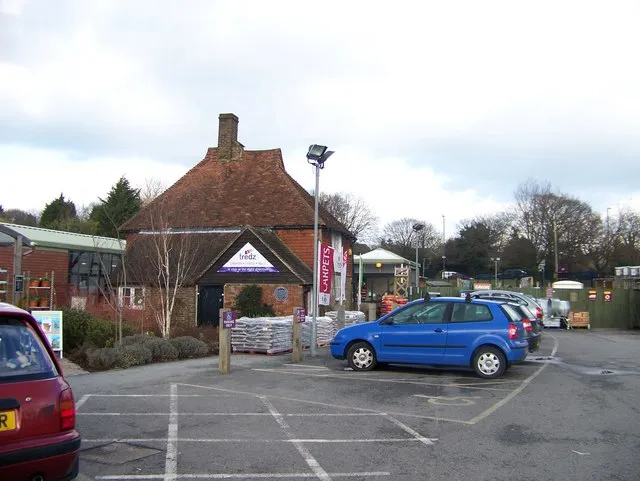
Photo: Elliott Simpson , CC BY-SA 2.0, via Wikimedia Commons
Spy fiction has a geography problem. Apparently every sensitive exchange in Britain must happen on a rain-slicked dock, under a railway arch, or in a car park so dimly lit it looks like the budget ran out before the bulbs. Lovely stuff, but faintly unrealistic. If you actually wanted to pass a envelope to someone without attracting attention in 2026, you would not choose a location beloved by every CCTV operator in the county. You would choose a garden centre.
Think about it. It is November, the Christmas displays are up, the café smells of soup and slight desperation, and nobody — absolutely nobody — is paying attention to two adults having a quiet word by the compost. The garden centre is Britain’s most underrated spy backdrop, and it is time we said so.
The beauty of the endlessly anonymous aisle
A good spy meeting needs three things: footfall, distraction and the plausible excuse that you are there for a reason. Garden centres deliver all three with the quiet efficiency of a staff member rearranging a gnome display.
There are aisles. So many aisles. Bird feeders, bamboo canes, bulbs, birthday cards, scented candles, a random section of expensive cheese. You can wander for forty minutes and still not look suspicious, because everyone else is also wandering for forty minutes and nobody has found what they came for. The whole place is designed for aimless loitering. In espionage terms, that is gold.
And the shoppers are gloriously varied. Retired couples debating a shrub. A dad who has been sent for one specific lightbulb and is now staring at a water feature. A child weeping gently near the inflatable snowman. Into this gentle chaos step two operatives in sensible coats. They could be discussing a mortgage. They could be discussing a mole. The garden centre does not care.
A café where cash is still king
There is something deeply reassuring about a garden-centre café. The tea is strong, the tray is slightly sticky, and the menu features at least three items with the word ‘homemade’ in front of them. It is also one of the few remaining places where paying in cash does not make you look like a character from a gritty drama.
This matters. In fictional spycraft, a cash transaction is a beautiful thing. No app notification, no loyalty card, no cheerful receipt emailed to an account you forgot you had. Just a tenner and a pot of tea. If you want to hand over a folded piece of paper, the correct method is not a dramatic park bench. It is under a saucer while one party says, ‘I’ll get the bill,’ and the other says, ‘No, no, I insist.’
Garden-centre cafés also have the perfect acoustic cover: the clatter of crockery and the low hum of people discussing whether it is too early for a scone. It is never too early for a scone. That is not spycraft. That is just Britain.
Car park choreography
A sprawling car park is a wonderful thing. It is full of cars, trolleys, people reversing badly, and the occasional abandoned plant pot. It is also full of exits. You can arrive from one direction, leave in another, and spend ten minutes pretending to look for your vehicle while actually checking whether the person by the silver hatchback is following you or simply cannot remember where they parked.
Garden-centre car parks have an additional advantage: they are not glamorous. Nobody expects a thrilling handover next to a trolley shelter. That is precisely why it works. The best fictional spy scenes are not the ones in which someone whispers, ‘The package is in the rhododendrons.’ They are the ones in which someone says, ‘Do you want a trolley?’ and it means something else entirely.
Ranking the classic garden-centre scenarios
-
The awkward bench handover by the shrubbery. Two people sit down. One has a newspaper. The other has a hot chocolate. They do not look at each other. The envelope changes hands under the bench. A nearby pensioner asks if they have seen the reduced-price bulbs. Tension: 6/10. Plausibility: 10/10.
-
The suspiciously specific purchase of three identical trowels. Why three? Nobody knows. The operative buys them with cash, declines a bag, and walks briskly towards the outdoor furniture. A staff member assumes it is a Christmas present for someone with a very small garden. Tension: 7/10. Confusion: 9/10.
-
The trolley swap. Two operatives exchange trolleys near the exit. One trolley contains a bag of compost. The other contains a bag of compost and a sealed envelope. The entire plan hinges on nobody wanting to buy compost. Tension: 5/10. Smell: earthy.
-
The compost dead drop. A bag of compost is left near the fence. Another bag of compost is placed beside it. A third bag of compost arrives later, because this is Britain and we cannot do anything without a queue. Tension: 4/10. Horticultural confusion: high.
-
The ‘do you sell secateurs?’ code. It is not a code. They sell secateurs. The operative has to buy secateurs. This is the most realistic scenario of the lot.
How to spot a fellow operative among the shrubbery
Let us be clear: this is a tongue-in-cheek checklist for fictional fun, not a guide to actual surveillance. If you see someone behaving oddly near the begonias, they are probably just trying to remember whether they already own a watering can.
Still, in the spirit of playful paranoia, watch for the person who asks a staff member an alarmingly specific question about soil pH, then buys nothing. Note the shopper who pays cash for a single plant pot and a large coffee. Observe the individual by the fence who has been on their phone for eleven minutes and has not yet looked at a single plant. And keep an eye on anyone who buys three identical trowels, because nobody needs three identical trowels.
Why it works on screen
Garden centres are British without being self-consciously British. They are ordinary, slightly chaotic and full of people pretending they know what they are doing. That is the perfect soil for suspense. A spy thriller does not need a helicopter. It needs a man in a padded jacket saying, ‘Lovely day for it,’ while a flash drive sits in a bag of bark chippings.
And in 2026, with Christmas displays already blocking the aisles in late November, the garden centre has never been more distracting. Santa’s grotto is being assembled. The inflatable reindeer is half-inflated. Somewhere near the till, a child is asking why the elf is missing an arm. Two operatives could exchange the secret to a nuclear reactor and the only thing anyone would say is, ‘Mind the display, please.’
So next time a spy drama opens with a moody shot of a dockside warehouse, feel free to yawn. The real tension is in aisle nine, between the compost and the Christmas decorations. Bring cash. Buy a trowel. And whatever you do, do not make eye contact over the reduced-price bulbs. That is how they get you.