Carriage of Interest: Why the 07:42 to Didcot Is Britain’s Most Suspicious Place
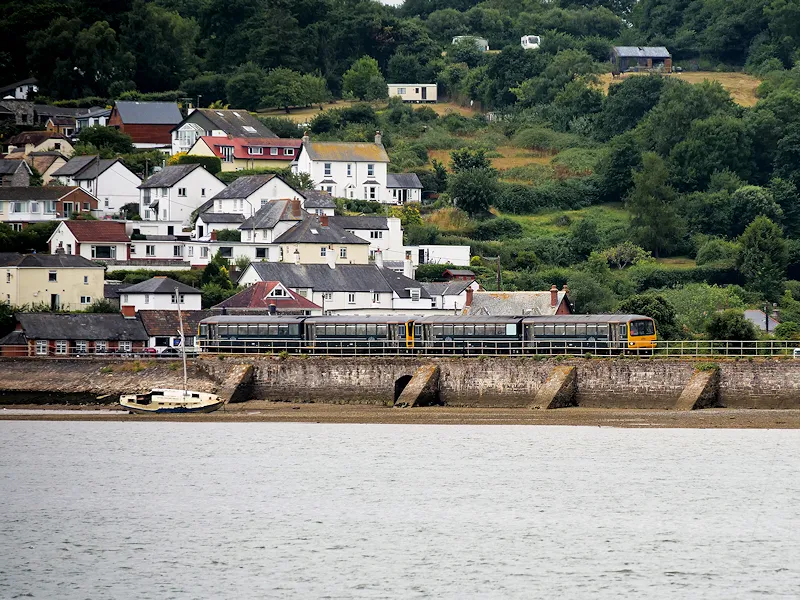
Photo: David Dixon , CC BY-SA 2.0, via Wikimedia Commons
Platform four, 07:41. A man in a sensible coat checks his watch, then the departure board, then his watch again. A woman opposite is reading a folded Metro with the intensity of someone decoding a cipher. Somewhere, a Thermos clicks. Nothing happens. It is, in other words, the most spy-thriller sentence Britain can produce.
Forget Alpine cable cars and casino tables. The real theatre of espionage is the 07:42 to Didcot, where the stakes are low, the carpet is patterned, and everyone is pretending not to listen. This is a place where a cough can sound like a signal, a ticket inspector can feel like a border guard, and a two-minute delay can function as a perfectly plausible alibi. In 2026, as we paw at our contactless cards and refresh the delay repay app, the commuter train remains the most British of spy sets: cramped, polite, and quietly seething.
The silence is the special effect
A quiet carriage is not quiet. It is a pressure cooker of unspoken rules. No phone calls. No eye contact. No audible enjoyment of anything. The rustle of a crisp packet at 07:48 is a diplomatic incident. A sneeze earns a murmur of 'bless you' from three strangers who will never speak again.
This is catnip for spy fiction. In a noisy room, secrets hide. In a silent one, every detail is amplified. The man opposite is not reading the Financial Times; he is using it as a screen. The woman by the window is not asleep; she is resting her eyes while counting the exits. The person who sighs at the train's sluggish Wi-Fi is not frustrated; they are sending a coded message to a handler in Basingstoke.
British trains also provide the perfect visual language of suspicion: the over-the-shoulder glance at the platform, the reflection in the dark window, the stranger who boards at Reading and immediately makes for the quiet coach. It is all very ordinary, which is exactly why it works. A spy in a tuxedo stands out. A spy in a fleece and sensible walking shoes blends in until they ask for the Wi-Fi password.
Delays are the perfect alibi
A delayed train is a gift to any screenwriter. 'Signal failure' is the most British of excuses: boring, plausible, and impossible to disprove. A character can linger on a platform for forty minutes without looking suspicious, because everyone else is doing the same. The departure board flickers. The tannoy apologises. The nation shrugs.
In spy terms, a delay is a holding pattern. It lets two agents swap a memory stick under the guise of picking up a dropped glove. It allows a tail to lose their target by boarding the wrong service to Slough. It gives a mole time to delete a file, send a text, and buy a meal deal. The 07:42 becomes the 07:58, and somewhere a handler updates a spreadsheet.
There is also the timetable itself, a thing of beauty for anyone who enjoys pattern recognition. Fast trains, slow trains, stopping services, the 07:42 that skips Didcot Parkway but stops at every other possible location. A spy thriller could be built entirely around a misread platform number. It would not be glamorous. It would, however, be accurate.
Ticket inspectors: the original interrogators
The ticket inspector is the unsung interrogator of British spy fiction. They arrive with a beep and a question: 'Where are you travelling to today?' On the surface, it is customer service. Underneath, it is a checkpoint. Your answer can betray you. 'Didcot' is fine. 'Just Didcot' is suspicious. 'I'm meeting someone' is a red flag wrapped in a return ticket.
A good inspector can spot a fare dodger at twenty paces. A great one can spot an agent carrying a false passport, a dead drop, and a half-eaten sausage roll. The inspector is neither friend nor foe; they are a force of nature, a reminder that in Britain, bureaucracy is always watching. In a spy thriller, they are the perfect obstacle: impossible to bribe with charm, impossible to ignore, and equipped with a card machine that never works.
A highly unofficial ranking of train-set spy scenes
- The Lady Vanishes — the ur-text of train paranoia. A missing passenger, a carriage of doubters, and a plot that turns a polite compartment into a nest of conspiracy. Still the gold standard.
- From Russia with Love — the Orient Express sequence remains the benchmark for train-based tension: dinner, danger, and a fight in a compartment that would fail every modern health and safety assessment.
- The 39 Steps — the train escape is a masterclass in British improvisation. A kiss, a hat, and a timetable are all you need to evade capture.
- Bullet Train — louder, sillier, and not remotely British, but it understands that a train is a corridor with nowhere to hide. The 2022 film is a useful reminder that confined spaces breed excellent chaos.
- The Commuter — a 2018 thriller that turns the evening rush into a puzzle box. It is not subtle, but it gets one thing right: the commute is already a conspiracy.
The unwritten rules of a 07:42 stakeout
First, arrive early. A late spy is a suspicious spy. Second, buy a coffee you do not intend to drink; it is a prop, a hand occupier, and a reason to linger. Third, sit where you can see the reflection in the window. Fourth, never make eye contact with the person you are following. Fifth, if they make eye contact with you, look at your phone and sigh at the signal.
British etiquette is your greatest weapon. Tut at a delay. Murmur 'unbelievable' at a cancellation. Offer your seat to someone elderly while maintaining a facial expression of mild inconvenience. This is not kindness; it is cover. The best agents do not blend in by being invisible. They blend in by being annoyed about the correct things.
And remember: a Thermos is not just a Thermos. It is a dead drop, a weapon, a source of tea, and a personality. If someone boards with a Thermos and no bag, ask yourself why. If they board with a Thermos and a bag, ask yourself why they need both.
How to spot a passenger who is definitely not just going to Didcot
They have three phones, one of which is a Nokia. They read the timetable upside down. They ask 'is this the Didcot train?' at every station, including Didcot. They wear a lanyard under a jacket, like a secret agent who has misunderstood the dress code. They are aggressively polite but never actually sit down. They order tea at 7am with the precision of someone defusing a bomb.
But here is the twist: most of them are just going to Didcot. That is the beauty of Britain. We are a nation of people who look suspicious because we are cold, tired, and trying to avoid conversation. The spy is the one who looks relaxed.
Mind the gap, maintain cover
The quiet carriage is a trap because it invites you to overthink. Every cough is a signal. Every delay is a plot. Every ticket inspector is a handler in disguise. The truth is simpler: Britain's commuter trains are perfect spy thriller sets because they are already full of secrets. Who is reading whose newspaper? Why did that person get off at Reading? And what, exactly, is in the Thermos?
Next time you board the 07:42, mind the gap, keep your voice down, and remember: you are not paranoid. You are just early for work.